


Case studies
Four deployments and what we learned from each. Governments and corporations in several countries now run these systems.
Establishing modern weapons security in China
It started with a news report
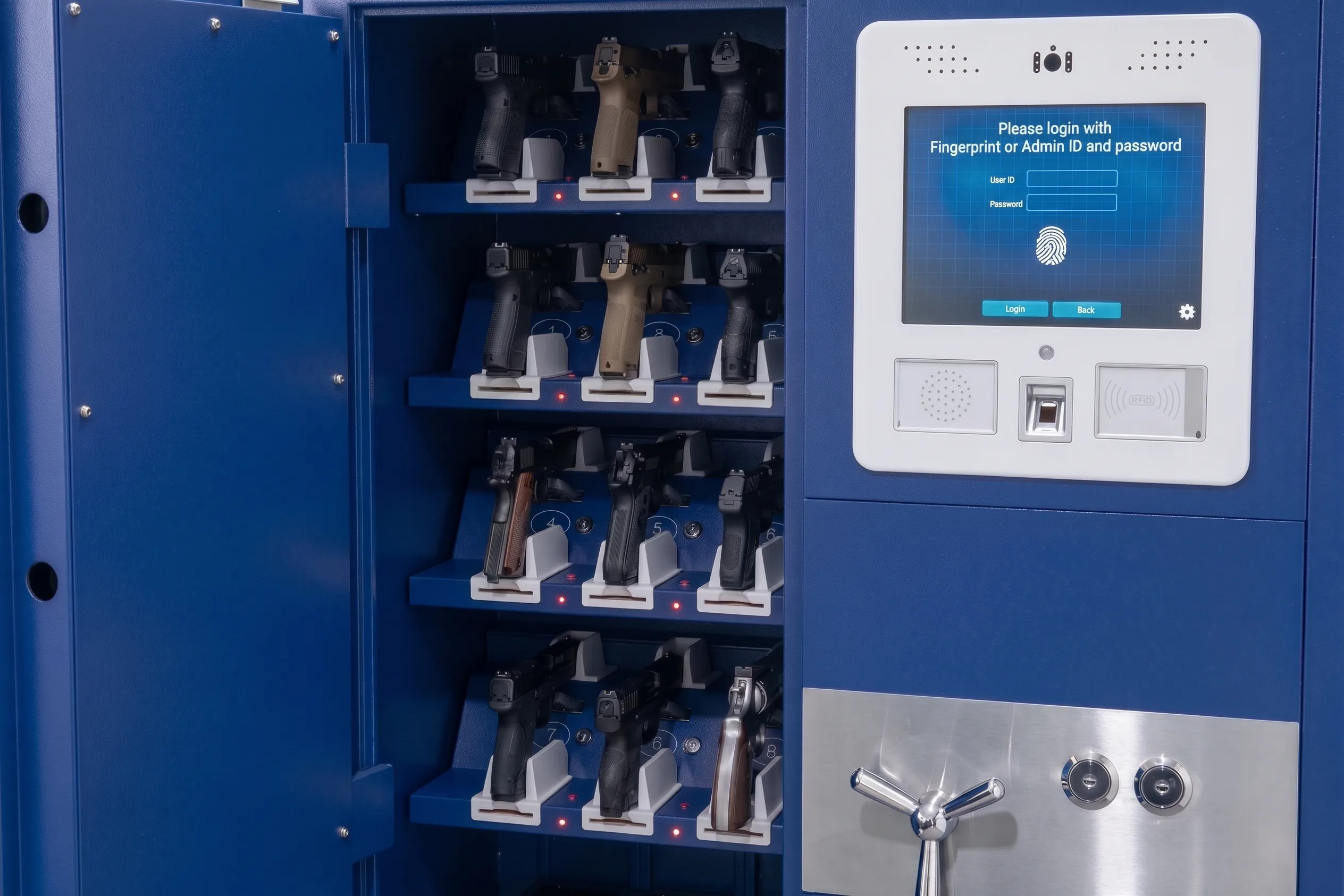
A criminal had procured a weapon illegally and was caught mid-crime. The gun turned out to have been stolen from the armoury of a remote police station. That incident prompted a locksmith and safe manufacturer to propose what became AWAMS, and together with Anyteksys they built one of the first modern digital weapons and ammunition armouries. Over several iterations the safe gained individual gun storage, ammunition counters, humidity control, individual logs and an access system.
Winning the tender
The central government was looking for a way to guarantee accountability for every weapon while reducing the maintenance cost of the firearms and ammunition used by the police force. An open tender was launched and Anyteksys won it, with enough capability to start a nationwide rollout of the prototype armoury. That win added 24/7 central monitoring assigned to a headquarters, automated user logs uploaded daily, and weapons usage and maintenance monitoring.
Success in numbers
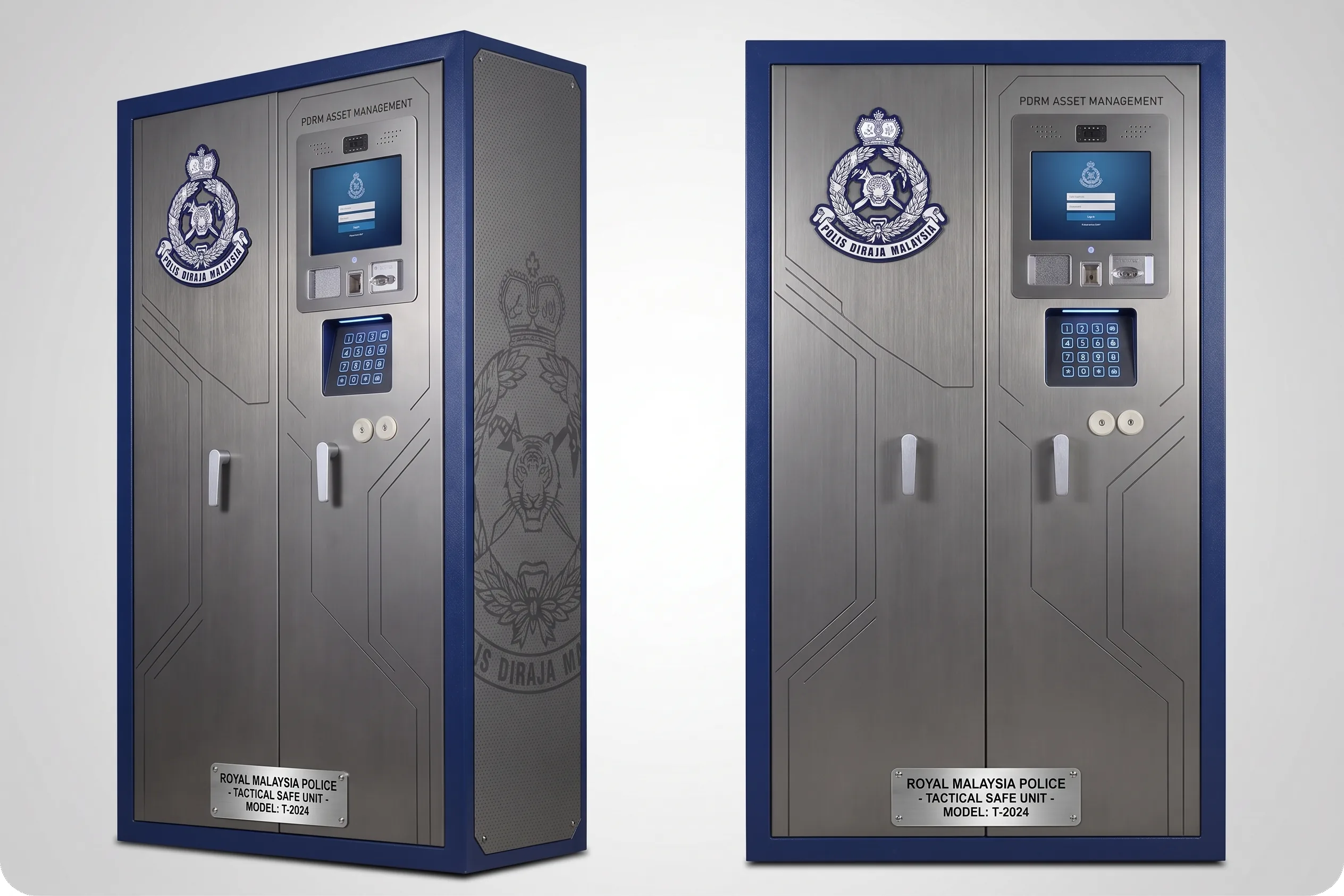
Over 60,000 AWAMS units have been deployed across China, saving millions of yuan in weapons maintenance and replacement. The system is now presented to national law enforcement agencies elsewhere as a proven platform for weapons and ammunition storage with measurable financial and accountability benefits.
The first step towards e-governance for Malaysia
Keeping authentication real
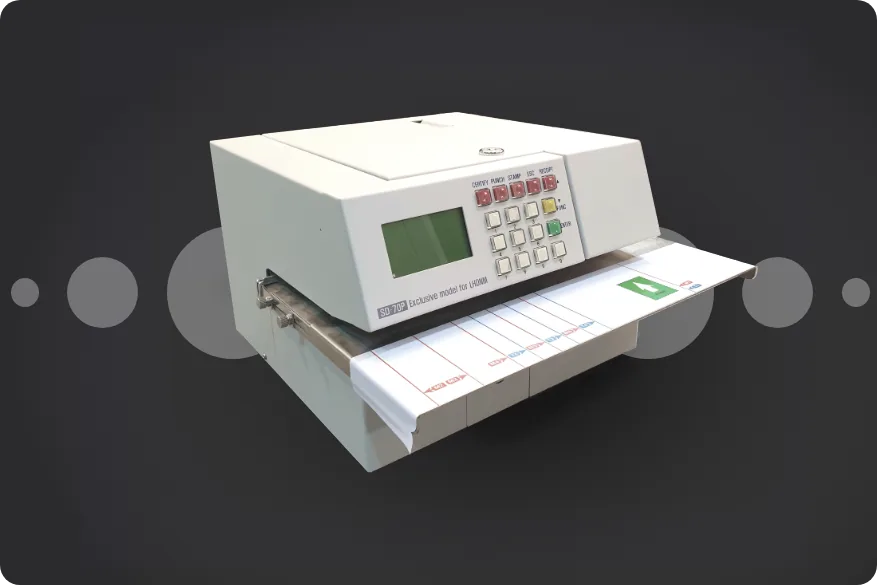
The Digital Franking System saved millions on stamp duty. Before it, the process was manual and convoluted: written onto small papers in poor handwriting, then stored across files, folders and departments, separated by days and places. Each of those papers held a commercial value, and added together they represented millions in lost revenue for the nation.
How we changed stamp duties
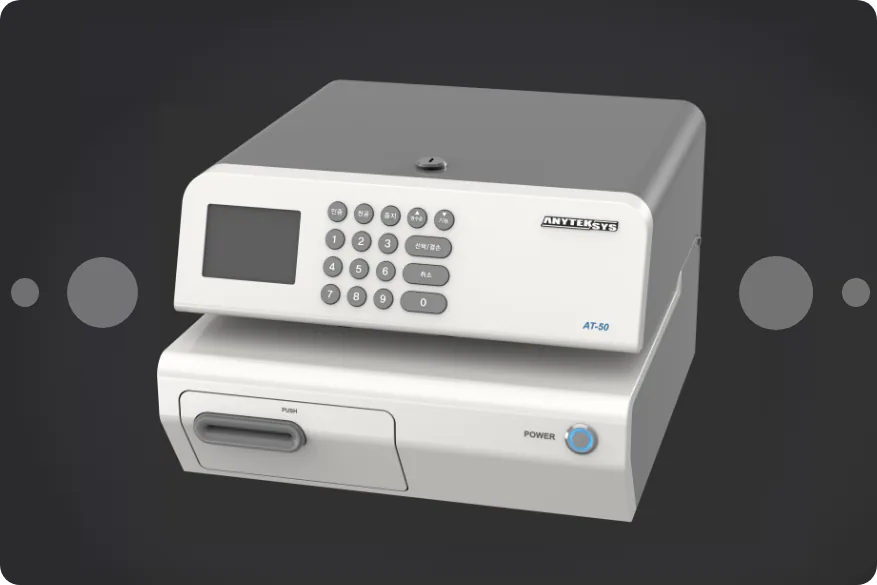
Manual stamp duty brought human error and shoddy record-keeping, and it was open to fraud. The Digital Franking System made the process transparent and reliable instead. Every stamp duty office was linked to a central online database. Nothing had to be filled in by hand or deciphered. Each stamp carried a serial number tied to an online system, so fraud could not pass authentication. Because the process was simple, everything downstream — collection, reporting, consolidation, accounting — became easier.
Benefits for the whole nation
The system also allowed stamp duties to be issued from private sector offices, which keeps them productive, saves operating cost and avoids penalties. Most of the public never sees the machine, but they feel it when the queue is short, when the stamp is issued on the spot, and when they can check online that it is genuine.
Making food directly available to customers
A fridge that bills like a vending machine
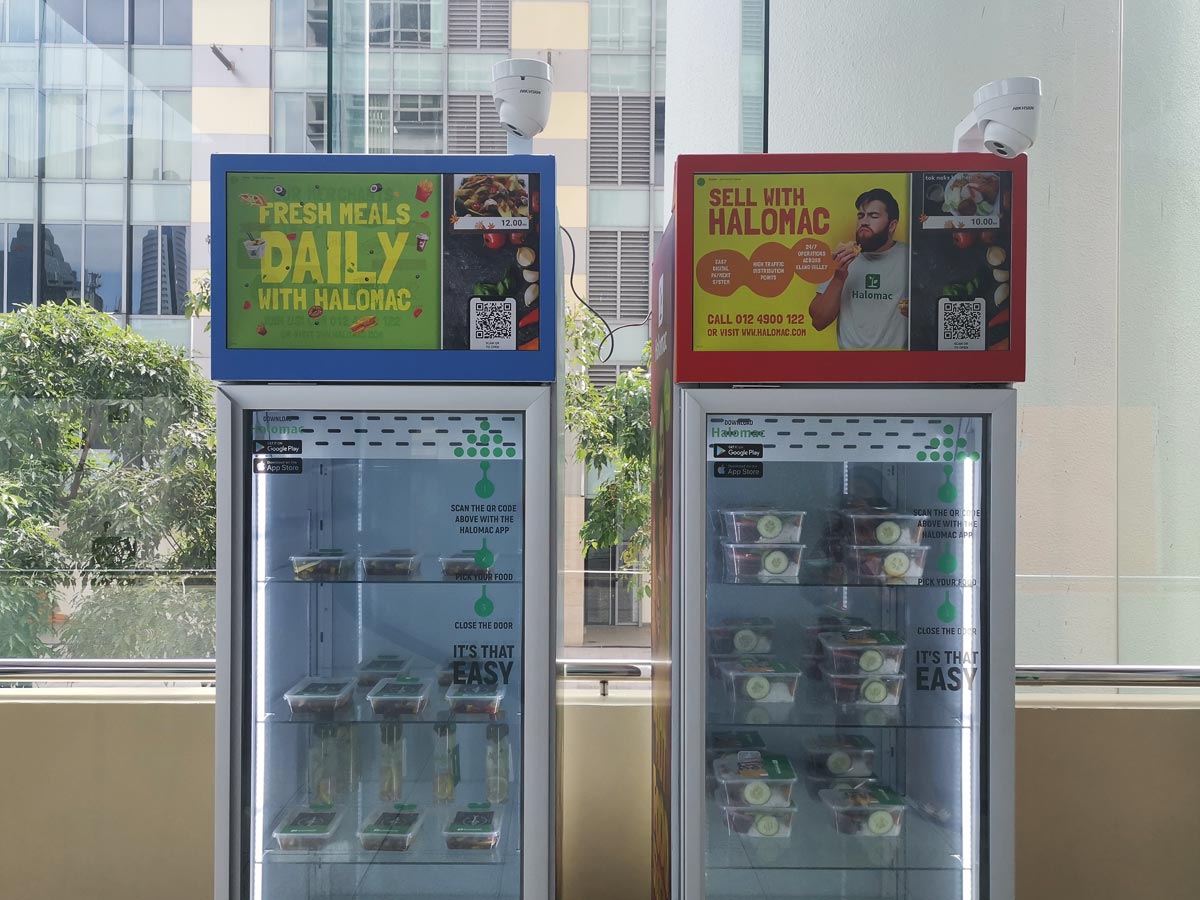
The Intelligent Micro Food Station is a ready-to-eat meal platform. The question behind it was simple: could a food distribution platform feel natural and still bill customers like a vending machine? The station detects which products are taken and bills accordingly, with a companion mobile application acting as a digital wallet and several payment channels integrated so people can pay the way they prefer.
Finding success
Buying a meal had to be seamless, and that ease caught the eye of Halomac. The company partnered with Anyteksys to market the food station across Malaysia. Their insight was placement: high-footfall urban offices with few food alternatives. From there they expanded location by location, validating each one with different foods from the merchants they recruited.
A global opportunity
Halomac's results showed there is a market for intelligent micro food stations. As cities get denser and lifestyles move faster, ready-to-eat demand grows with them. We see further room for the platform outside Malaysia.

Employee management through face recognition
Two factories in Johor, one headquarters
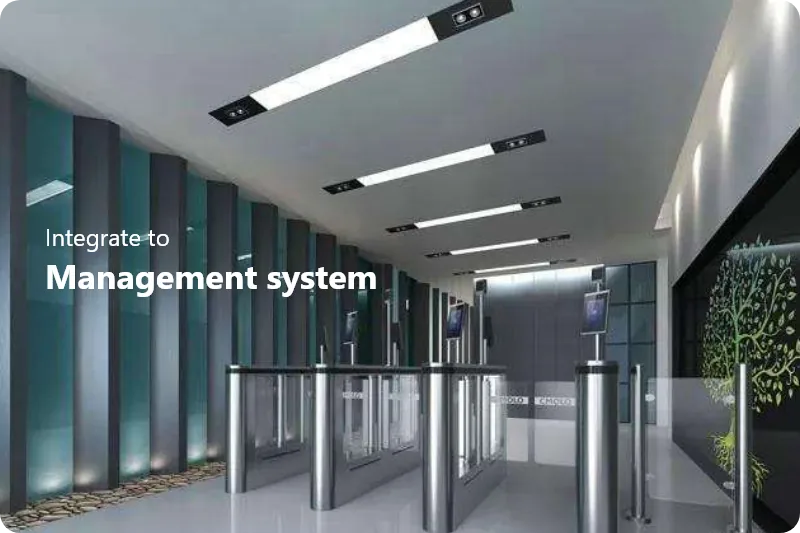
ScanPlus was implemented in the factories of a manufacturer in Johor to record worker attendance and monitor temperature. We built integration and customisation work on top of it so the customer could monitor both sites, in different locations, from their headquarters.
A semiconductor plant in Penang
At a semiconductor plant in Penang, ScanPlus was integrated with the existing HR system for time attendance. A second effect mattered as much: because the plant knows how many workers are on shift that day, the canteen prepares the right amount of food, with no shortage and no waste.

Send us the situation you are trying to fix and we will tell you what a deployment would look like.